Two systems for water others write off.
Recovera™ VRR-1 recovers water from an RO reject stream. HEDRO ECO treats wastewater from scratch in a single container. Both are engineered around the same conviction: recovery is an engineering problem, not a disposal problem.
Recovera™ VRR-1
A modular water-recovery system for project-specific treatment and reuse of RO reject water — blending raw water with RO reject, recovering the clean fraction through membrane filtration, and returning it to the RO to lift overall plant recovery.
- Application
- RO-reject recovery
- Architecture
- Conditioning + solids separation + membrane filtration + controlled recycle
- Reference product
- Recovera™ VRR-1
- Membrane area
- 12 m² (reference configuration, modular — sized per project)
- Preliminary suction/TMP
- ≈ −0.2 bar
- Current maturity
- Pilot engineering
- Note
- Recovery performance is project-specific, defined during engineering and subject to site-water analysis
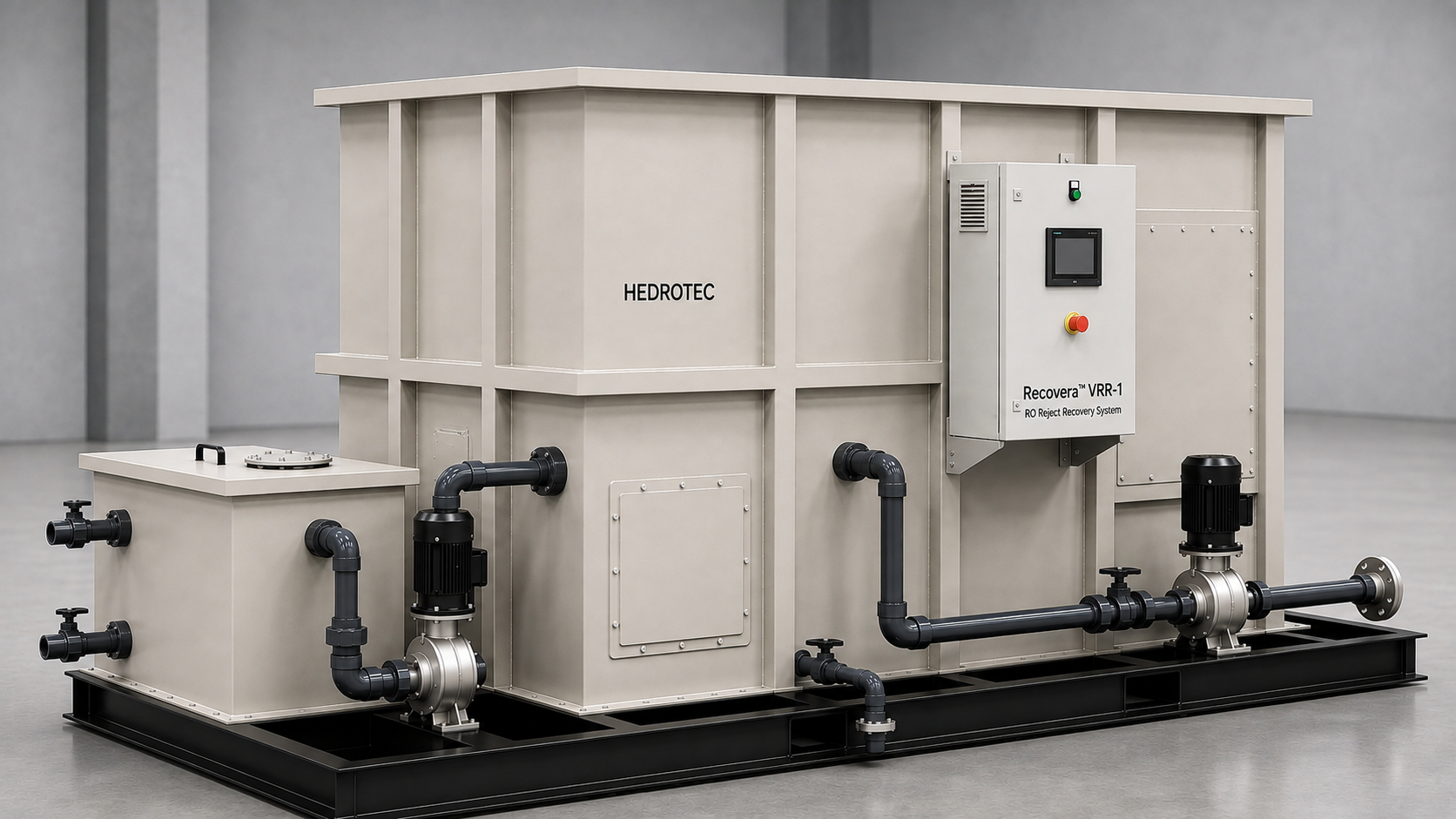
Conceptual exterior render — pilot engineering configuration
Raw water + RO reject recycle
Raw water blends with recirculated RO reject.
Blend
Combined feed for downstream conditioning.
Conditioning / precipitation
Feed-specific dosing ahead of solids separation.
Solids separation
Sludge discharged as a separate outlet.
Membrane filtration
Modular membrane area, sized per project; purge leaves the loop separately.
Recovered water → RO
Permeate feeds the existing RO as recovered water.
RO product
RO reject recirculates back to blend, closing the loop.
Closed-loop process concept — recovery objective is project-specific, defined during engineering. Membrane filtration stays downstream of conditioning and solids separation.
One blend tank, one closed loop.
Raw water and the RO's own reject stream mix at T-BLEND, producing a more stable feed for the ceramic membrane than raw reject alone. VRR-1's permeate becomes RO feed; the RO's reject recirculates back to T-BLEND instead of going to drain — only VRR-1's purge leaves the loop.
- Membrane— modular membrane filtration, 12 m² reference configuration
- Recovery objective— project-specific improvement, defined during engineering
Four stages, closed loop.
Blending
Raw water and recirculated RO reject mix into a more stable combined feed than raw reject alone.
Membrane filtration
Submerged membrane modules, modular membrane area sized per project, provide controlled-suction filtration tuned to feed-specific fouling behavior.
Backwash & air scour
Backwash and air scour are sized to the selected membrane configuration and feed-specific fouling behavior.
Recovery & recirculation
Permeate feeds the RO as recovered water; purge leaves the loop as a separate stream.
Design
Preliminary process design underway; reference membrane configuration selected as the engineering starting point.
Validation
Performance and final configuration are subject to feed-water analysis and pilot validation.
Deployment
Pilot deployment planned once validation and procurement are complete.
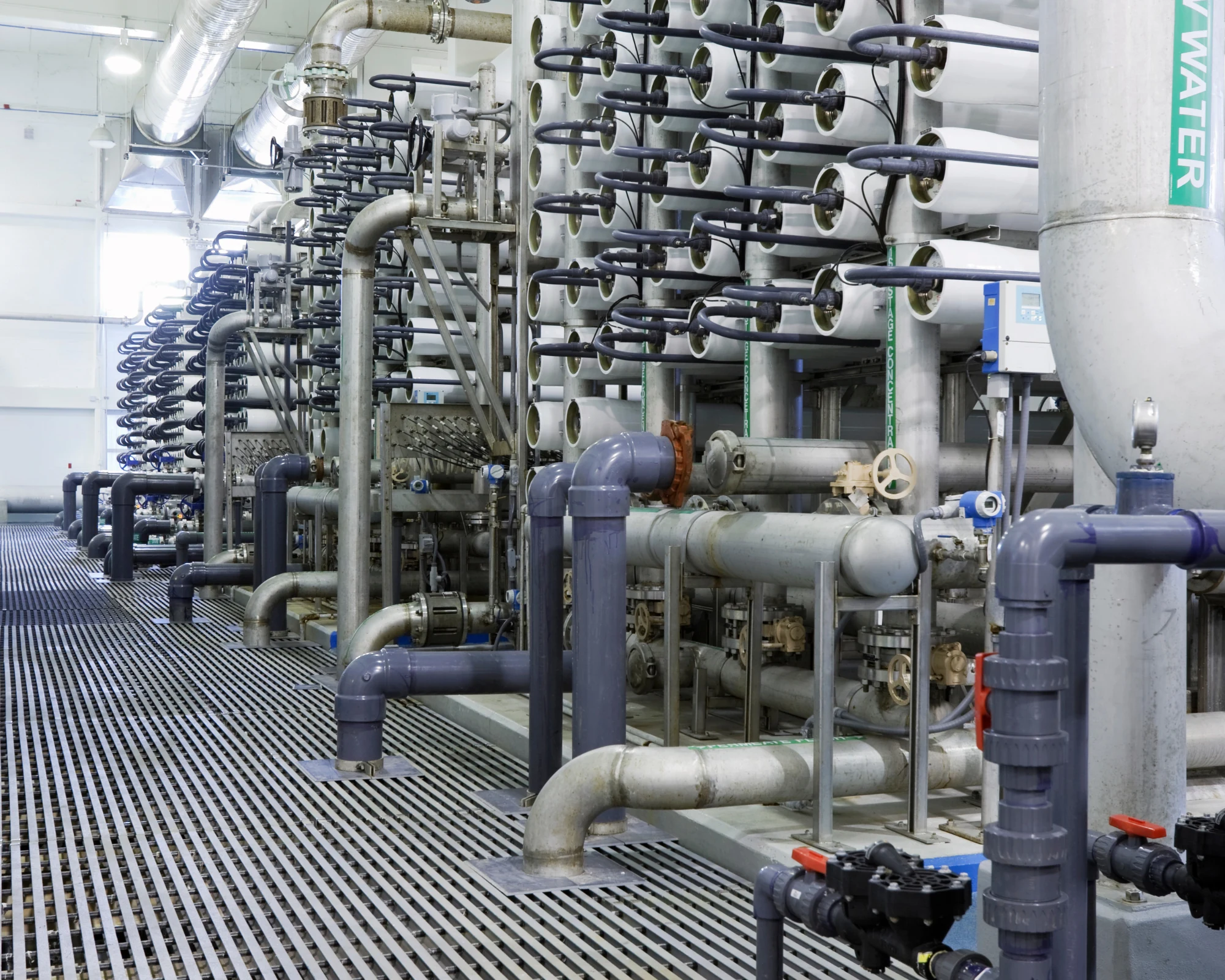
Industrial membrane-treatment infrastructure — representative field context.
HEDRO ECO
A modular wastewater-treatment system under development for an approximate 50 m³/day reference capacity, combining biological treatment, separation and final disinfection in a containerized reference configuration.
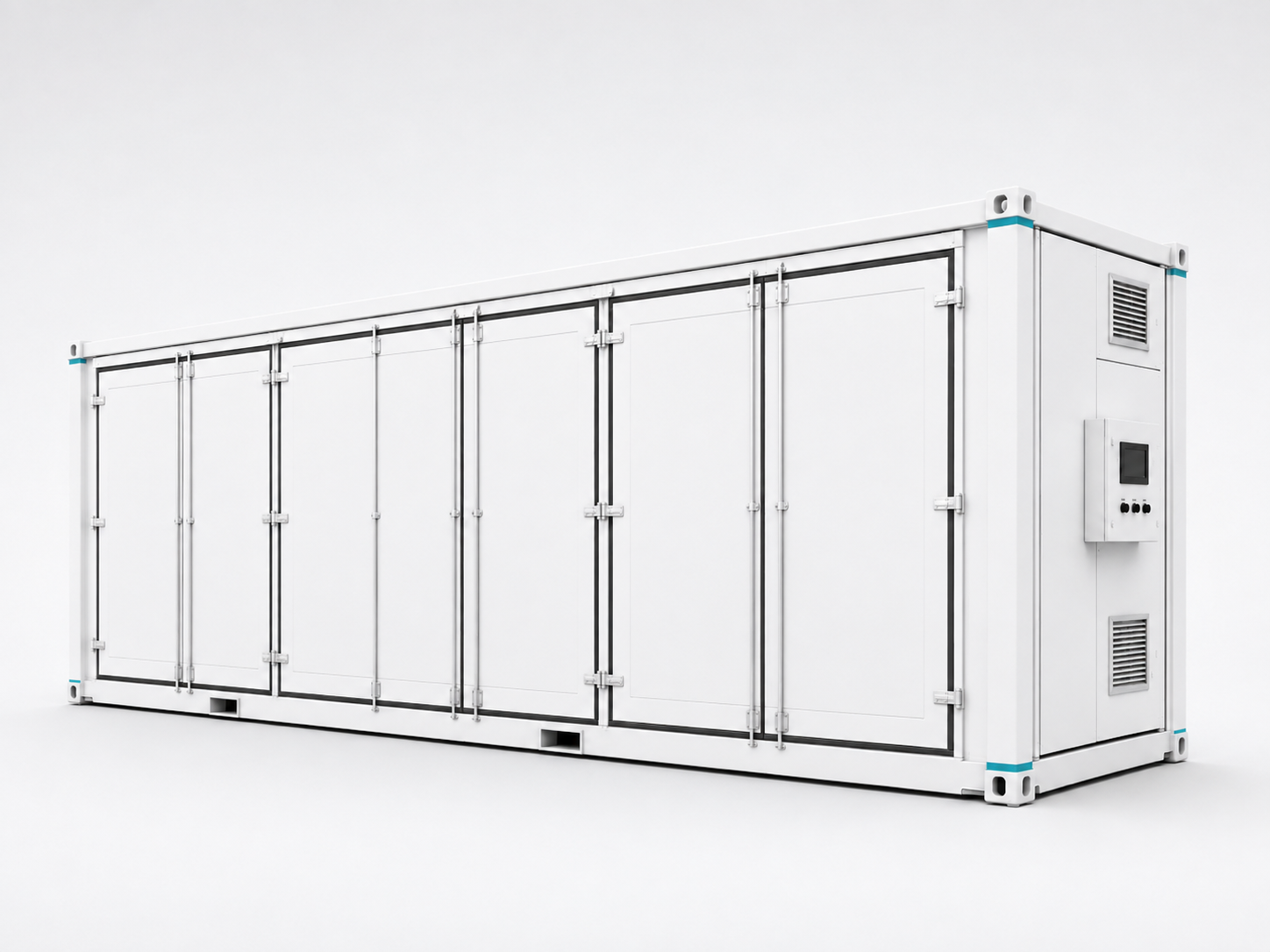
Conceptual exterior render — HEDRO ECO platform
Conceptual process architecture — final configuration is project-specific.
Untreated wastewater
Wastewater enters the containerized treatment system.
Screening & flow buffering
Conditions the feed according to influent characteristics before biological treatment.
Organic-load reduction
Project-specific biological process selected according to influent characteristics and treatment objective.
Excess solids are directed to sludge management as a separate branch.
Separation stage
Separation technology selected during project engineering according to the effluent/reuse objective.
Final treatment
Final disinfection ahead of the intended reuse or discharge application.
Treated water
Routed to the project-specific reuse or discharge objective.
| Parameter | Value |
|---|---|
| Flow rate | 50 m³/day target, expandable in parallel units |
| Treatment objective | Project-specific effluent quality |
| Reuse objective | Defined according to project requirements |
Final effluent quality depends on influent characterization, hydraulic loading, temperature, final process configuration, and applicable local discharge or reuse requirements.
Screening to reuse, in one container.
Pretreatment & equalization
Screening and flow buffering condition the feed according to influent characteristics before biological treatment.
Biological treatment
Project-specific biological process selected according to influent characteristics, treatment objective and site constraints.
Separation
Membrane or other appropriate separation configuration selected during project engineering according to effluent/reuse objective and operating conditions.
Disinfection & reuse
Final disinfection and treated-water storage, sized to the intended reuse or discharge application.
Built for sites without central infrastructure.
Municipal & institutional
Small municipalities, schools and universities, hospitals and clinics without a central sewer connection.
Humanitarian & remote
Refugee camps, military installations, and off-grid rural communities needing rapid, self-contained deployment.
Commercial & industrial
Hotels and resorts, housing compounds, and light food & beverage processing needing on-site treatment.
Key parameters
| Parameter | Value |
|---|---|
| Reference concept | Approx. 50 m³/day target capacity in a containerized configuration |
| Biological treatment | Project-specific process, selected per influent characteristics |
| Separation | Membrane or other appropriate configuration, selected during project engineering |
| Design climate | Ambient up to 45°C |
| Control | PLC/timer, auto/manual/alarm modes |
| Expansion | Parallel units for higher capacity, no modification to base unit |
| Status | Concept engineering — ready for supplier discussion |
Design references: DIN 4261, ATV-DVWK-A 131/M 210, EU Wastewater Directive 91/271/EEC, DIN EN 12566. Concept-level engineering for evaluation. Final tank partitioning, access, maintenance clearances, dimensions and pricing are subject to detailed engineering.
Vertical reactor architecture.
HEDROTEC is developing a proprietary reactor architecture designed for compact integration, reduced footprint and modular deployment across project-specific applications.
As a platform technology, it can form the core reactor architecture for project-specific treatment systems — not a single standardized unit.
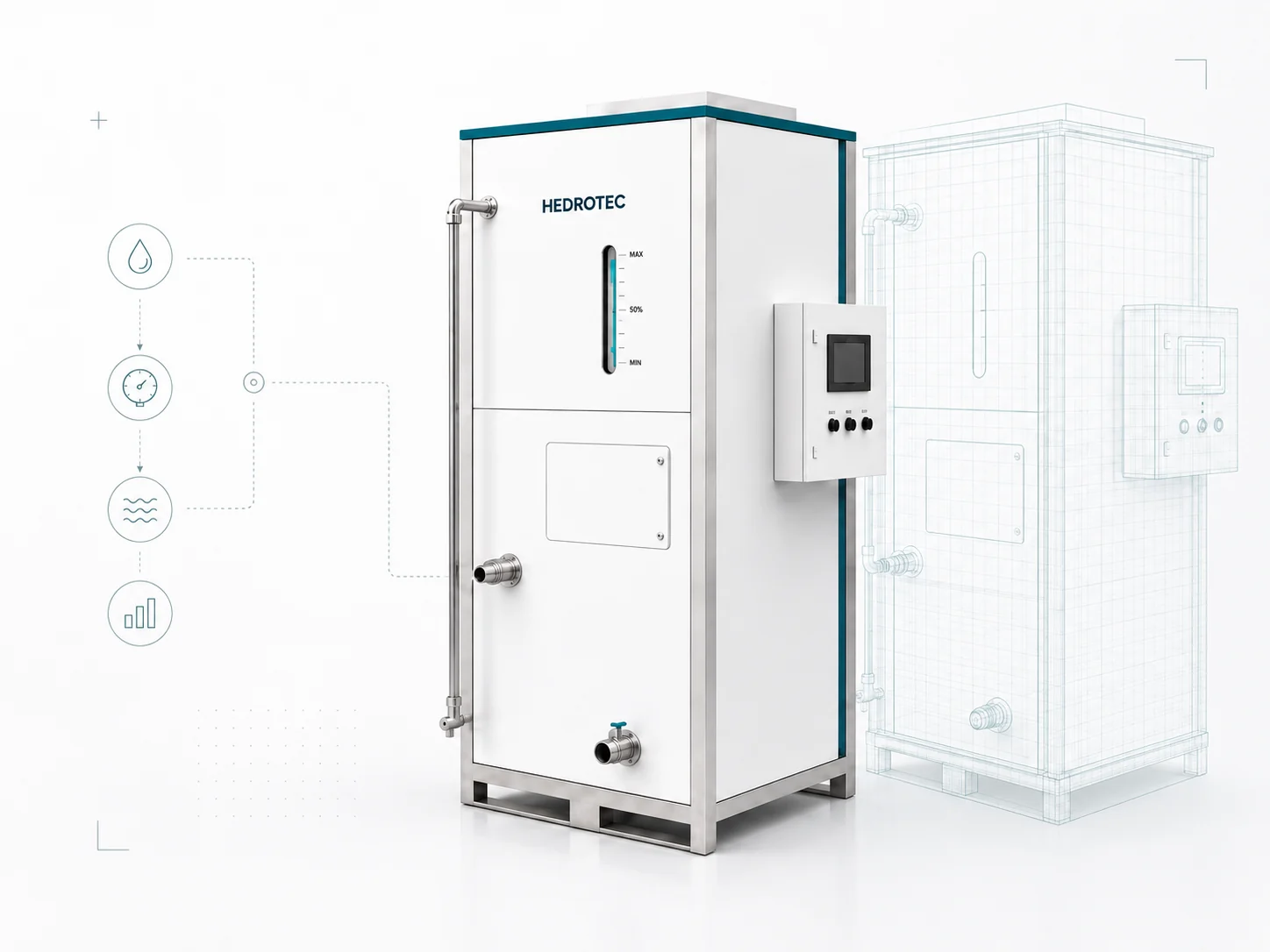
Conceptual system visualization. Internal architecture undisclosed.
| Parameter | Value |
|---|---|
| Application | Compact modular water and wastewater treatment systems |
| Architecture | Vertically organized integration of multiple treatment functions within one reactor envelope |
| Deployment | Modular / project-specific |
| Design objective | Reduced footprint and compact treatment integration |
| Integration | Biological treatment can be integrated as a process layer where required by the wastewater characteristics and treatment objective; membrane separation can be integrated as a system-level component |
| IP status | Patent pending — German patent application DE 10 2026 001 174.4 |
| Configuration | Final process configuration is project-specific |
Internal reactor geometry, treatment sequence and component arrangement are not disclosed publicly and remain the subject of the pending patent application.
Additional system configurations.
Beyond Recovera™ VRR-1 and HEDRO ECO, HEDROTEC engineers additional system configurations for compact biological treatment, ceramic membrane integration and pretreatment validation.
HEDRO MBR V-SERIES
A compact, vertical-format membrane bioreactor integrating biological treatment and ceramic membrane filtration in a reduced footprint — suited to applications where site space is constrained.
CeraBox 50 Plus
A compact modular ceramic membrane treatment system for decentralized wastewater treatment, polishing and reuse applications, related to the HEDRO ECO platform.
PTP-50
A pilot-scale coagulation, flocculation and clarification unit for treatment evaluation, chemical-conditioning trials and process validation ahead of full-scale design. Adjustable 25–75 L/h.
Every rejected stream is a resource waiting on the right engineering.
Send us your feed water parameters and we'll help you size a system.