Engineering water systems. Supporting industrial transformation.
HEDROTEC provides project-specific engineering for water treatment, water reuse and wastewater systems — from feasibility and process design through implementation and commissioning support. Through the HEDROTEC Institute for Industrial Transformation, we also support manufacturing companies in process improvement, digitalization and operational development.
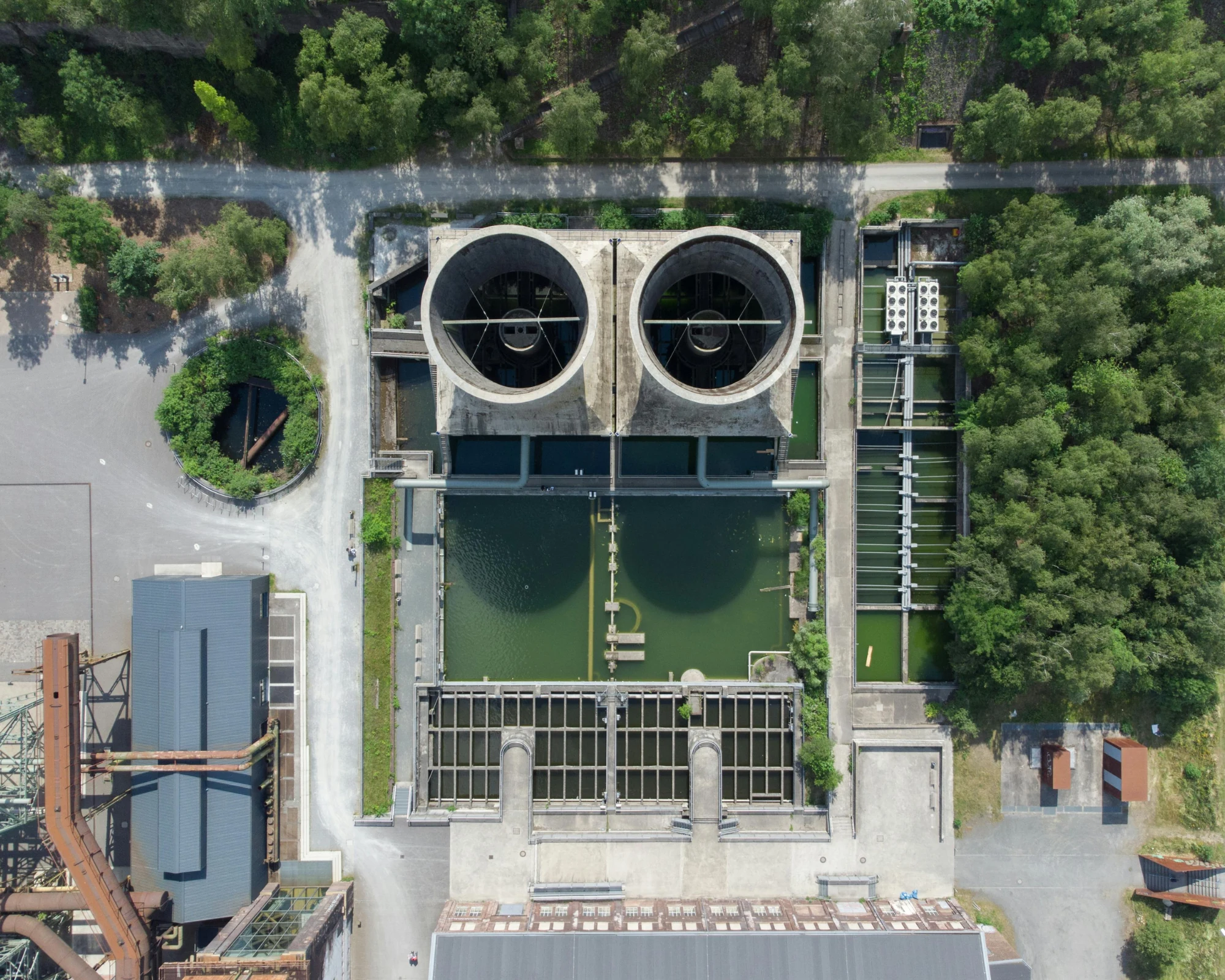
Water-treatment infrastructure — representative engineering context.
Water Engineering Services
From feasibility and process concept through engineering, procurement support, commissioning and operational improvement.
HEDROTEC acts as an engineering partner for water treatment, water reuse, wastewater treatment, RO recovery and reject-water treatment, pretreatment systems, membrane-system integration, decentralized treatment, and plant upgrades and optimization — integrating proven specialist components into project-specific engineering, not manufacturing membranes ourselves.
01 — Feasibility & Process Concept
Site and water-data assessment, treatment objectives, process selection, preliminary mass balance and feasibility pathway.
02 — Basic & Detailed Engineering
Design basis, process flow diagrams, P&IDs, equipment sizing, hydraulic design, layouts, interfaces and control philosophy.
03 — Tendering & Procurement Support
Technical specifications, RFQ packages, BOQ/BOM preparation, bid comparison and vendor technical evaluation.
04 — Project & Interface Management
Coordination between client, suppliers and fabricators, engineering interfaces, design reviews and implementation planning.
05 — Commissioning & Validation
Commissioning planning, start-up support, performance verification, sampling/testing strategy and operating-window definition.
06 — Operations, Optimization & Upgrades
Operating review, debottlenecking, water-recovery optimization, O&M improvement, operator training and retrofit planning.
Understand → Define → Engineer → Implement → Commission → Optimize.
Understand
Water quality, process constraints and reuse objective.
Define
Design basis and treatment concept.
Engineer
Process, equipment, controls and interfaces.
Implement
Procurement support, fabrication coordination and site integration.
Commission
Start-up, testing and validation.
Optimize
Operational improvement and future upgrades.
Application categories.
Industrial Water & Reuse
Process water, reuse and recovery applications.
RO System Optimization
Pretreatment, reject-water recovery and integration around existing RO plants.
Decentralized Wastewater Treatment
Modular treatment and reuse systems for sites without centralized infrastructure.
Municipal Water Reuse
Concept development, feasibility and modular reuse infrastructure.
Retrofit & Plant Improvement
Optimization and upgrading of existing water-treatment systems.
Illustrative application categories — not all reflect completed HEDROTEC references. Engagement scope is project-specific.
Discuss your water project.
Share your water analysis, process data or treatment objective and HEDROTEC can assess the appropriate engineering pathway.
Across water systems and industrial operations, HEDROTEC applies the same engineering principle: understand the process, define the constraint, engineer the intervention and support implementation.
HEDROTEC Institute for Industrial Transformation.
A commercial service practice of HEDROTEC GmbH supporting manufacturing companies with operational modernization and implementation — not a separate company, university, or public institute.
German industrial methodology. Adapted to MENA manufacturing realities.
The HEDROTEC Institute for Industrial Transformation is a commercial service practice of HEDROTEC GmbH — not a separate legal entity, university institute, or government institution. It applies the same engineering discipline HEDROTEC uses in water technology to manufacturing operations: established industrial plants, growing manufacturers and legacy operations working to modernize, improve quality and productivity, and compete internationally.
- Structured engineering diagnostics— not a generic strategy exercise
- Disciplined implementation— support through execution, not only recommendations
- Operational transparency— documentation and data that hold up to scrutiny
- Realistic modernization pathways— scoped to each factory's actual constraints
- Local manufacturing context— adapted to MENA operating realities

Six pillars of industrial transformation.
Each engagement is scoped around these six areas. Select a pillar for representative examples.
01 — Operations & Production
Production flow, bottlenecks, utilization, line balance and operating discipline.
02 — Process & Quality
Process stability, quality systems, standardization and root-cause improvement.
03 — Digitalization & Data
Data availability, KPI architecture, shop-floor visibility and practical digitalization priorities.
04 — Maintenance & Reliability
Asset reliability, preventive maintenance, downtime structure and maintenance organization.
05 — Energy & Resource Efficiency
Energy, water, materials, waste and resource-productivity opportunities.
06 — Organization & Implementation
Roles, routines, management systems, training and execution roadmap.
Diagnose → Prioritize → Design → Implement → Verify.
Diagnose
Understand operations, constraints, data and priorities.
Prioritize
Identify the highest-value and most realistic improvement opportunities.
Design
Define practical technical and organizational measures.
Implement
Support execution, specifications, suppliers and internal teams.
Verify
Measure outcomes and define the next improvement cycle.
Industrial Transformation Diagnostic
A productized on-site diagnostic with project-specific scope.
- Duration— defined according to site size, scope and data availability
- Preparation— existing KPIs, production data, layout, products, organization, key constraints
- On-site diagnostic— management interviews, production walk, process observation, material-flow, maintenance, quality, energy/resource and digital-maturity review
- Analysis— KPI baseline, loss map, bottleneck analysis, risk map, maturity assessment, opportunity prioritization
- Management review— findings and priorities presented to leadership
Industrial Transformation Assessment
- Operational maturity overview
- Loss map
- Risk map
- KPI baseline
- Prioritized improvement opportunities
- 90-day quick-win program
- 12-month transformation roadmap
- Digital and data readiness assessment
- International-readiness recommendations, where applicable
Deliverable depth depends on data availability and engagement scope. Financial outcomes are not promised without sufficient underlying data.
Grounded in real industrial-operations and process-engineering work.
The Institute builds on hands-on experience in industrial production scaling, operational systems and quality management, supported by a flexible network of specialist experts across production, process engineering, quality, safety, sustainability, automation, digital systems and data/AI.