REWA Al-Tall
Municipal Wastewater Treatment & Reuse Project — Al-Tall, Rural Damascus Governorate, Syria.
A foothill setting, north of Damascus.
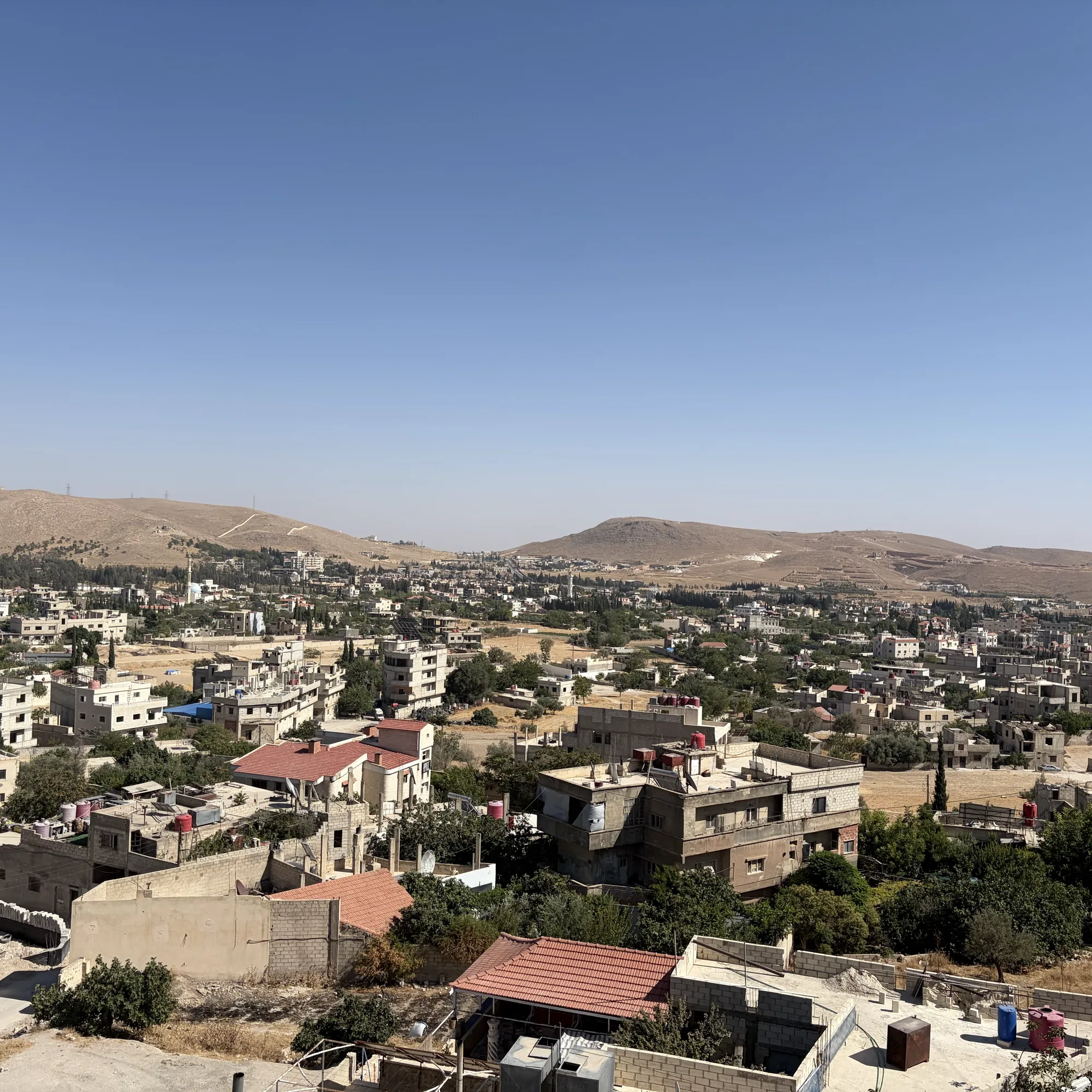
Al-Tall is a foothill / mountainous settlement north of Damascus. Terrain of this kind directly affects how a wastewater system is engineered: it can enable gravity-assisted conveyance where the slope allows, and it can require pumping where it doesn’t — and it influences where a treatment site can realistically sit.
Schematic geographic and terrain context only — not a site, sewer route, interception point or hydraulic corridor map.
Geographic context
Al-Tall lies north of Damascus, within mountainous / foothill terrain.
Schematic geographic and terrain context only — not a site, sewer route, interception point or hydraulic corridor map.
Approximate geographic reference values from public sources; not project survey data. They do not represent a surveyed alignment, hydraulic profile, sewer route, interception point or gravity-flow corridor.
No plant site, interception point or sewer route has been confirmed. Determining them is part of the topographic and hydraulic verification planned for the next project stage.
Local Context.
Demographic & Infrastructure Pressure
Al-Tall has experienced substantial population growth, including growth associated with internal displacement during and after the conflict. A national water-sector study references a city population of approximately 400,000 inhabitants — a contextual planning figure, not a census figure — reflecting sustained pressure on local infrastructure and services.
Water Stress
Groundwater wells are a major component of Al-Tall’s current municipal water supply. Older contextual assessments indicate significant water-supply pressure and reported extended rationing intervals in parts of the city. Local authority records identify 18 wells in the current supply inventory; reliable availability varies with operating hours, downtime, seasonal conditions and network losses, and remains subject to verification.
Wastewater
Al-Tall has an existing sewer network, but no local treatment facility currently meeting the proposed local reuse objective.
The interception point, conveyance route and treatment site remain subject to field, topographic and hydraulic verification.
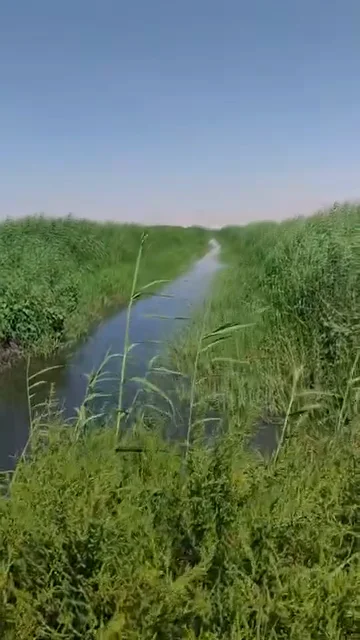
Field documentation of a wastewater-collection area near Utaybah, Rural Damascus. Regional context only; no hydraulic connection to Al-Tall has been established.
What REWA Al-Tall is intended to achieve.
REWA Al-Tall is intended to establish local wastewater-treatment and reuse capacity for Al-Tall, addressing the current gap between an existing sewer network and the absence of a local treatment facility. The objective is to make treated water available for suitable non-potable applications, contributing to reduced pressure on freshwater resources, while building local technical and operational capacity through structured knowledge transfer. Achieving this objective depends on the feasibility, verification and design work described in the following sections.
A proven, conventional treatment sequence.
The treatment concept follows a proven, conventional process sequence, engineered for local operating conditions and long-term maintainability.
Municipal Wastewater
Untreated flow entering the system.
Pretreatment
Coarse solids and grit removed.
Biological Treatment
Organic load reduced using established, well-proven process technology.
Physical Solids Separation
Effluent quality stabilized ahead of reuse-oriented treatment.
Reuse-Oriented Treatment
Configured to the water-quality target of the intended reuse application.
Productive Water Reuse
Agricultural reuse, suitable non-potable municipal applications and other suitable non-potable uses.
Additional treatment stages can be integrated where required to meet the water-quality target of the intended reuse application.
The design basis is modular, enabling phased implementation. Planned full-development capacity is 10,000 m³/day. Phase capacities and implementation sequence will be confirmed during structured feasibility and project preparation.
| Planned full-development capacity | 10,000 m³/day |
| Configuration | Modular, phased treatment infrastructure designed for progressive implementation and future expansion |
| Process basis | Biological treatment + physical solids separation + reuse-oriented treatment |
What should change if the project is implemented.
These outcomes reflect the current project logic. They remain subject to confirmation through feasibility, verification and implementation planning, and are not a guaranteed or quantified impact projection.
- Local wastewater-treatment capacity established
- Treated water made available for suitable non-potable reuse
- Contribution to reducing pressure on freshwater resources
- Strengthened local technical and operational capacity
- Engineering and operational know-how retained within the local institutional and technical system
Intended reuse applications
- Agricultural reuse
- Suitable non-potable municipal applications
- Other suitable non-potable reuse applications, subject to feasibility
Where the project stands.
July 2026 — project concept and local water context reviewed with the relevant water-sector authority and local stakeholders; preliminary feasibility development subsequently advanced.
REWA Al-Tall is currently at the preliminary feasibility / project-development stage of structured project preparation. Further feasibility, verification and implementation planning are required before detailed engineering and construction.
Project development completed to date includes preliminary engineering, local institutional coordination, treatment concept development and an initial cost and economic framework.
The next project-development stage will consolidate field verification, technical surveys, reuse demand, environmental and social requirements, and implementation structuring as part of formal feasibility and Basic Design.
The next stage is Field Verification and Basic Design — not construction, financing approval, or an EPC award.
Three distinct roles within the project structure.
Institutional Anchoring
The project is locally anchored through relevant municipal, district and water-sector institutions, supported by an established local coordination structure. Final ownership and operating arrangements have not yet been defined and will be confirmed during structured project preparation.
Community & Civil-Society Interface
The project-development approach provides for engagement with local civil-society and community actors — particularly on community needs, reuse acceptance, local communication and feedback.
Local Engineering & Delivery Capacity
Local engineering offices and institutions are already involved in the project’s development approach. Syrian engineering firms, specialized water-treatment companies, contractors and local supply chains are intended to play substantial roles in implementation and future operation and maintenance.
A central project objective.
Knowledge transfer is a central objective of REWA Al-Tall. The project-development approach is structured so that technical know-how remains within the local institutional and technical system.
Design Review Participation
Local operating entity participates in design review and equipment selection.
Specialized Training
Training on main equipment and systems ahead of procurement completion.
Pre-Operation Training
Safety, operation, control, laboratory and maintenance training.
Joint / Trial Operation
Shared operation under German and local technical supervision during commissioning.
Supported Operation
Gradual handover of operating responsibility to the local entity.
Independent Operation with Defined Technical Support
Independent operation with defined technical support.
Train-the-Trainer / Institutional Knowledge Retention
Internal trainers retain institutional knowledge through staff turnover.
FITT gGmbH, affiliated with htw saar (Saarland University of Applied Sciences), supports project development and the knowledge-transfer approach.
HEDROTEC’s Role
HEDROTEC initiated REWA Al-Tall and contributes project development, engineering coordination and technical integration — the German–Syrian engineering interface. Future engineering and implementation responsibilities will be defined within the applicable project and procurement framework.
Documentation access.
Project materials are made available according to institutional review requirements. Selected project documentation is available to qualified institutional and technical counterparts through direct engagement and, where appropriate, under suitable confidentiality arrangements.
Seeking structured institutional engagement.
REWA Al-Tall is at the project preparation stage and is seeking structured institutional engagement toward feasibility and phased implementation.
Relevant engagement may include
- Technical project evaluation
- Feasibility and project preparation
- Water-sector programme evaluation
- Implementation structuring
- Development-finance dialogue
- Connection to the appropriate institutional water or Syria team
- Contact
- Firas Abou Kuba
HEDROTEC GmbH - firas@hedrotec.com